Daycare for a 2- to 3-Year-Old: How Programs Change as They Grow
Between two and three years old, children go through a significant developmental shift, from largely nonverbal toddlers to increasingly independent, communicative preschoolers. A good daycare programme should visibly change to match this, rather than treating a two-year-old and a three-year-old identically.
What Changes Developmentally in This Window
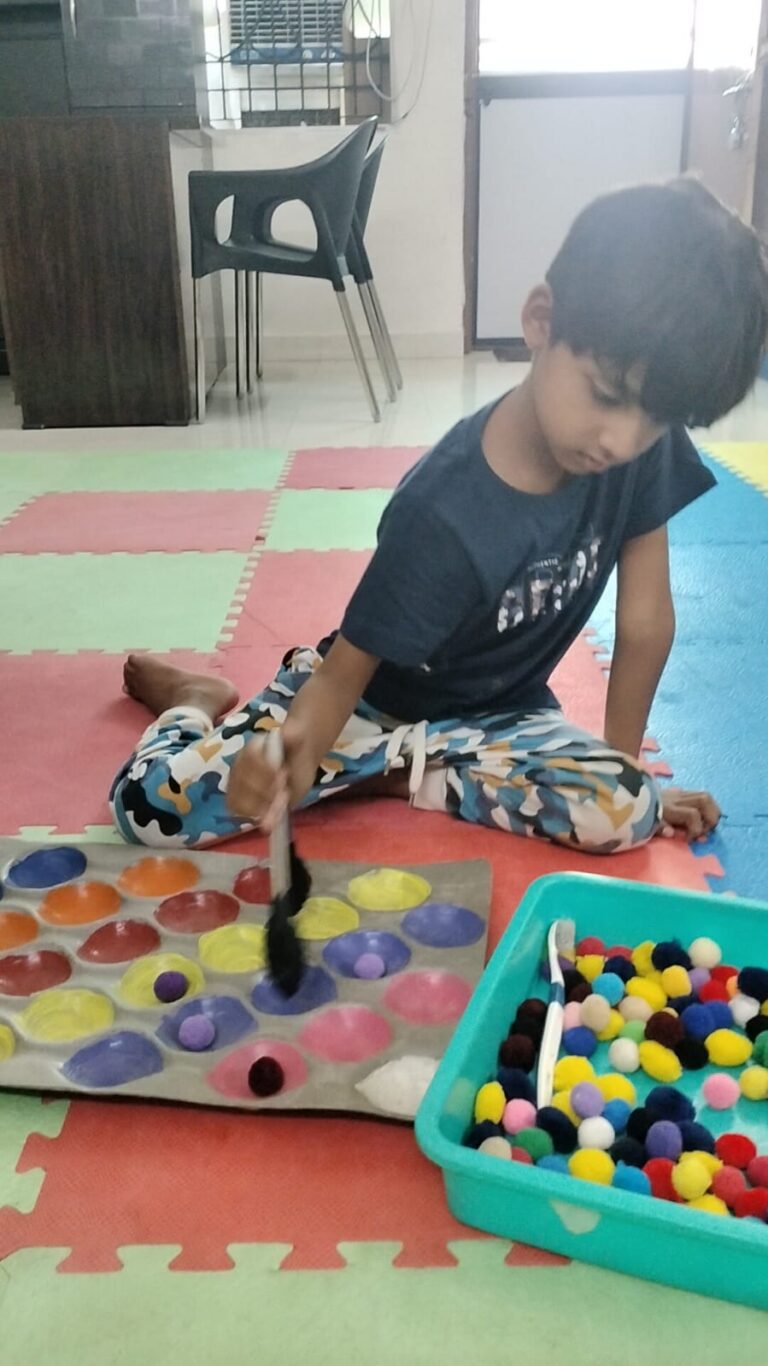
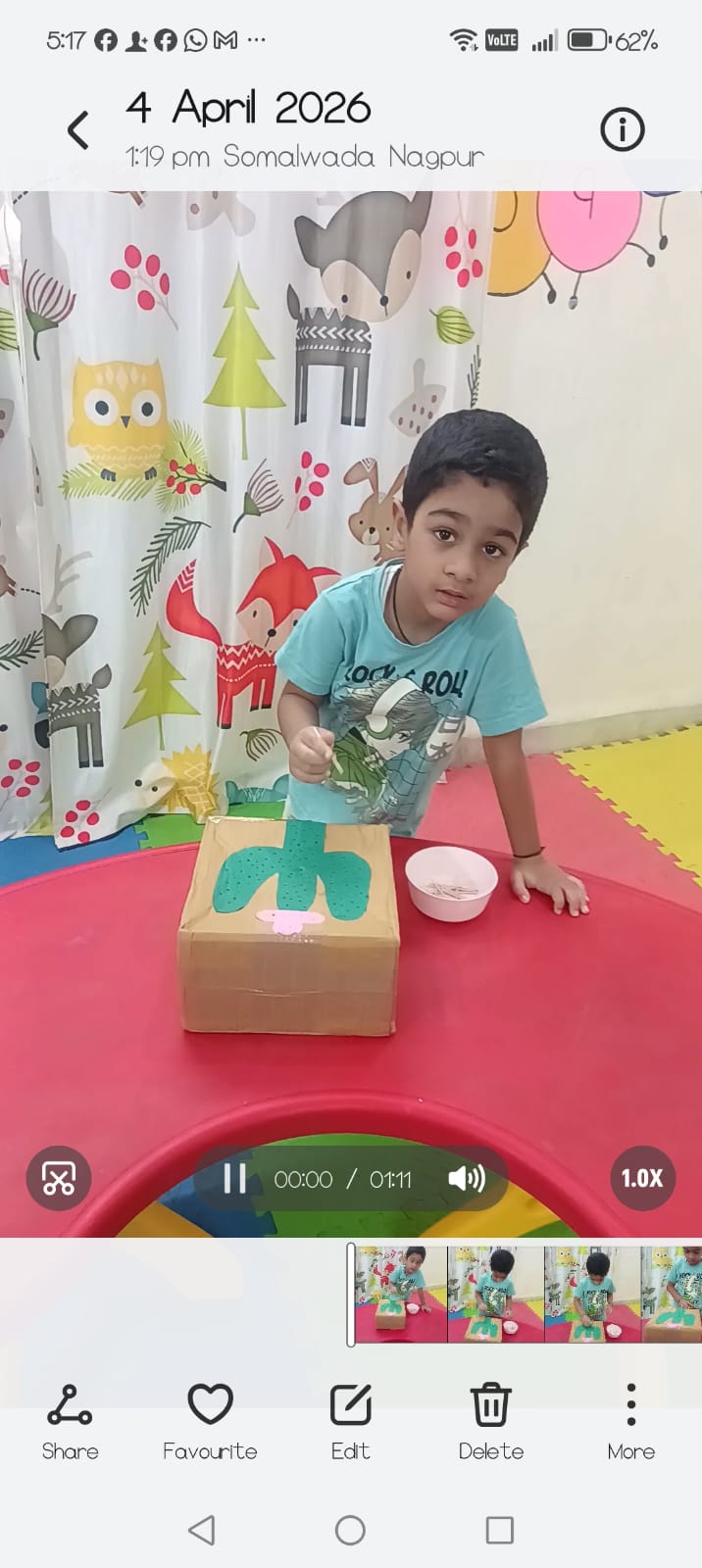
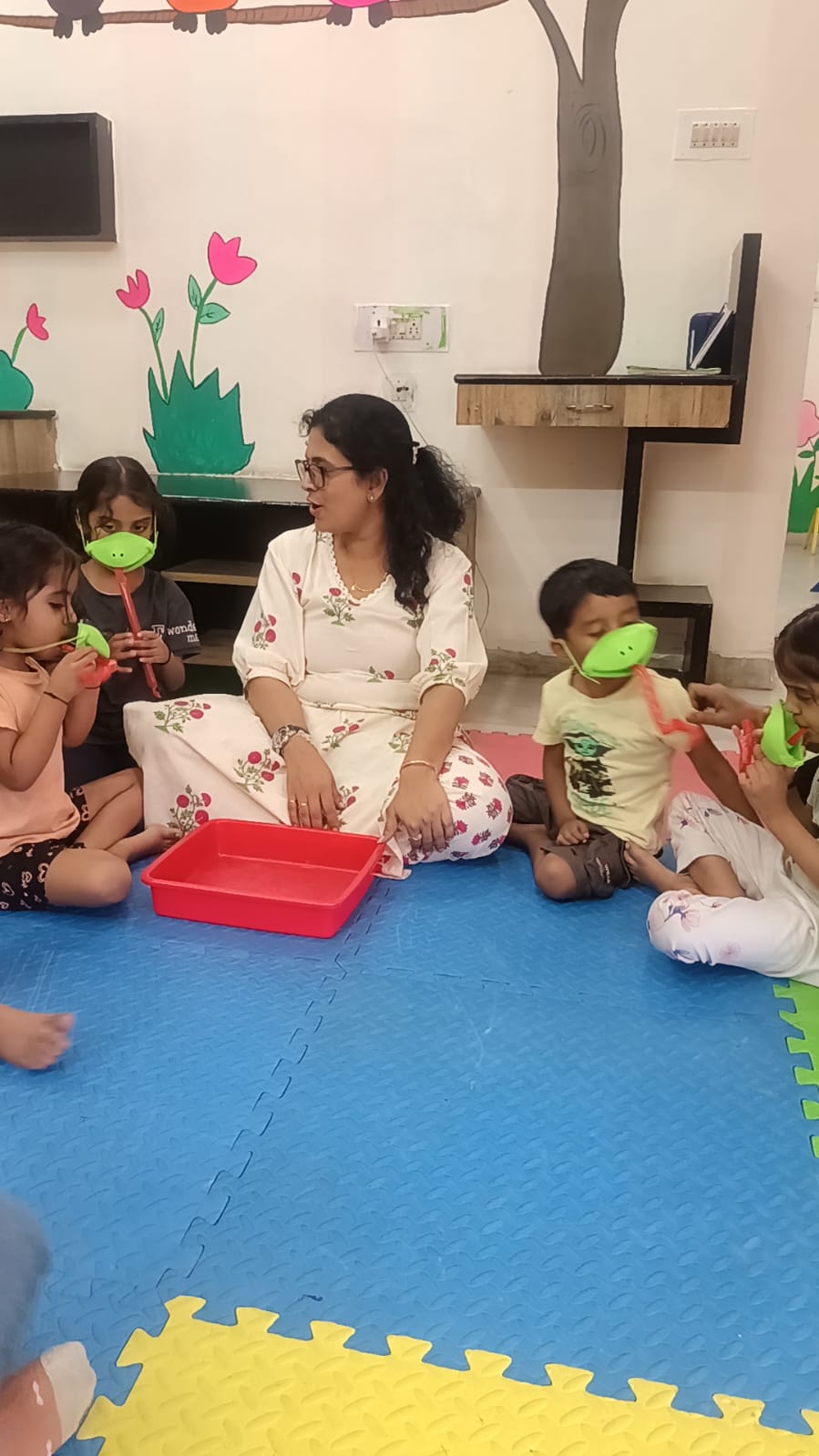
Language typically expands rapidly during this period, moving from a handful of words to full sentences for many children. Physical independence grows too: more coordinated movement, early self-feeding, and increasing interest in group play rather than solitary activity. A programme should adapt its structure to track these changes.
What a Well-Adapted Programme Looks Like
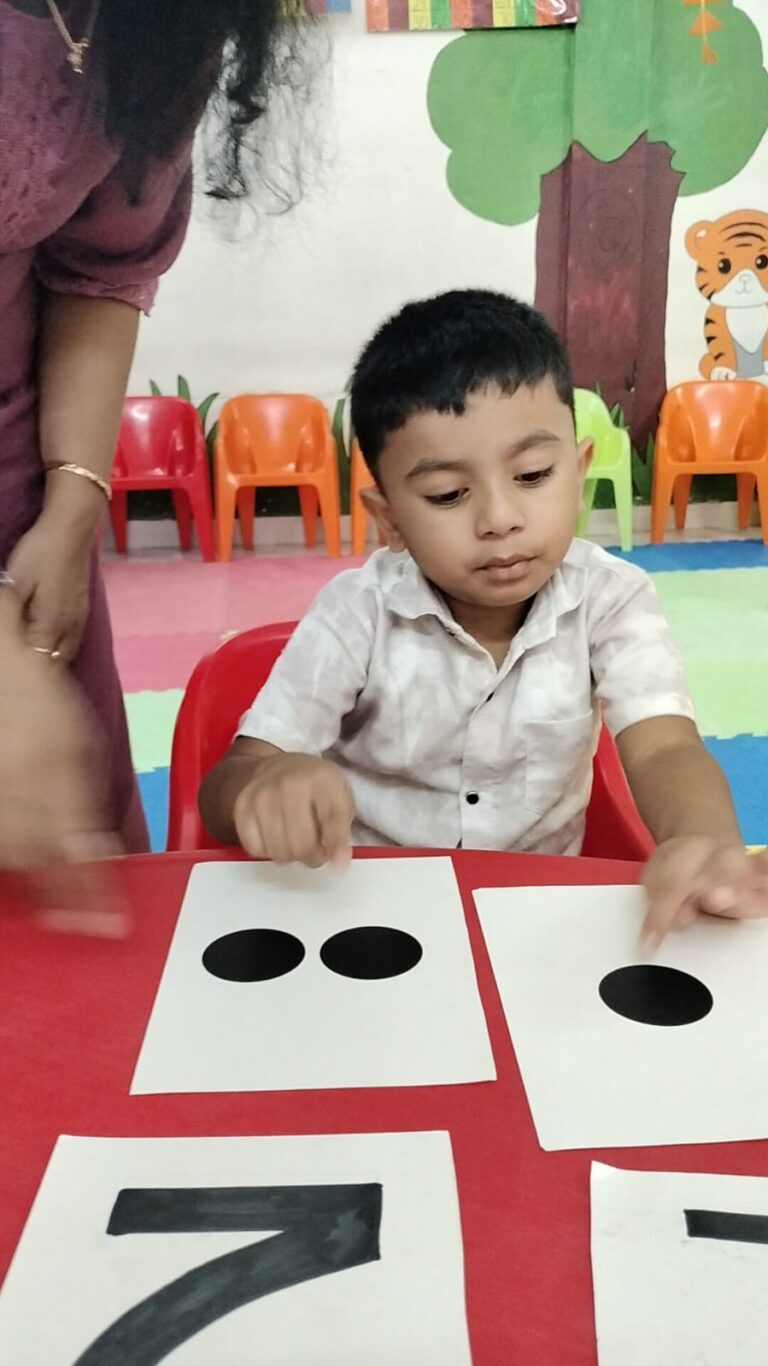
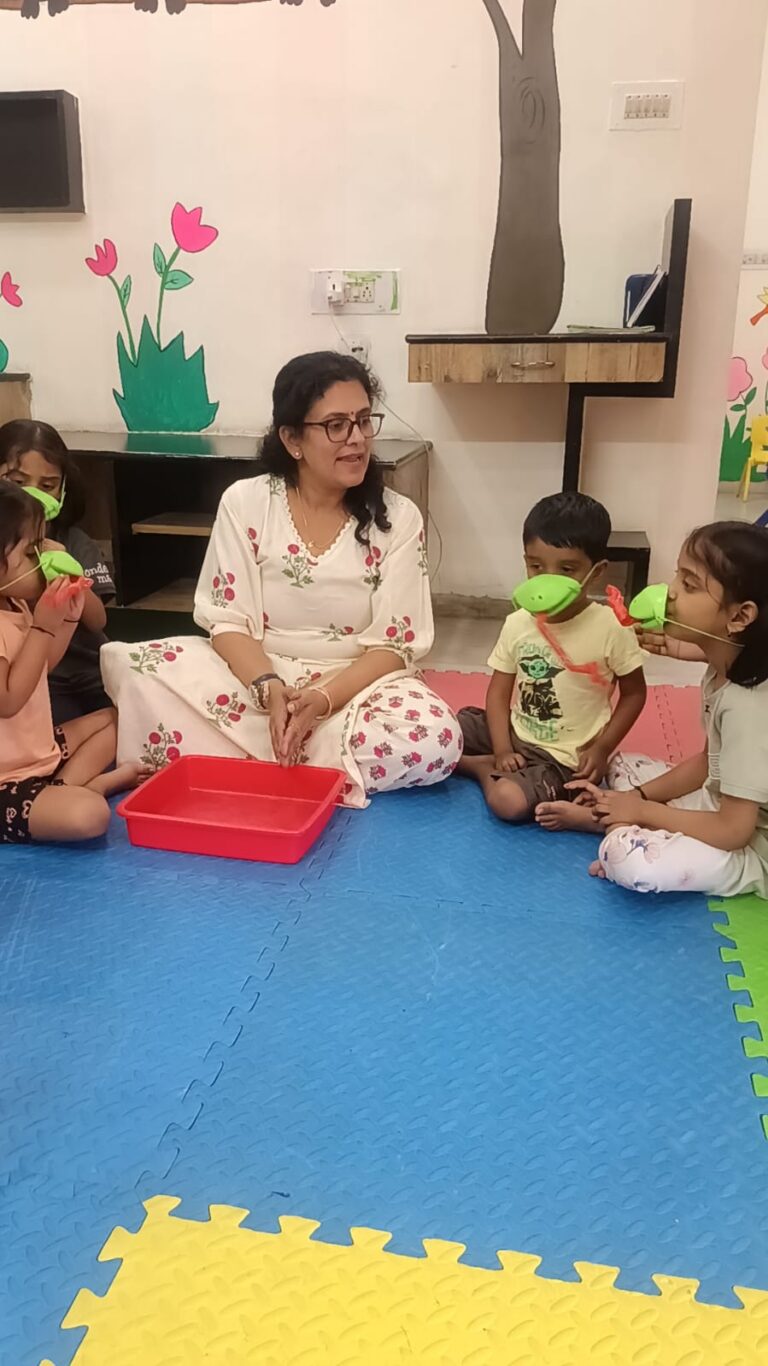
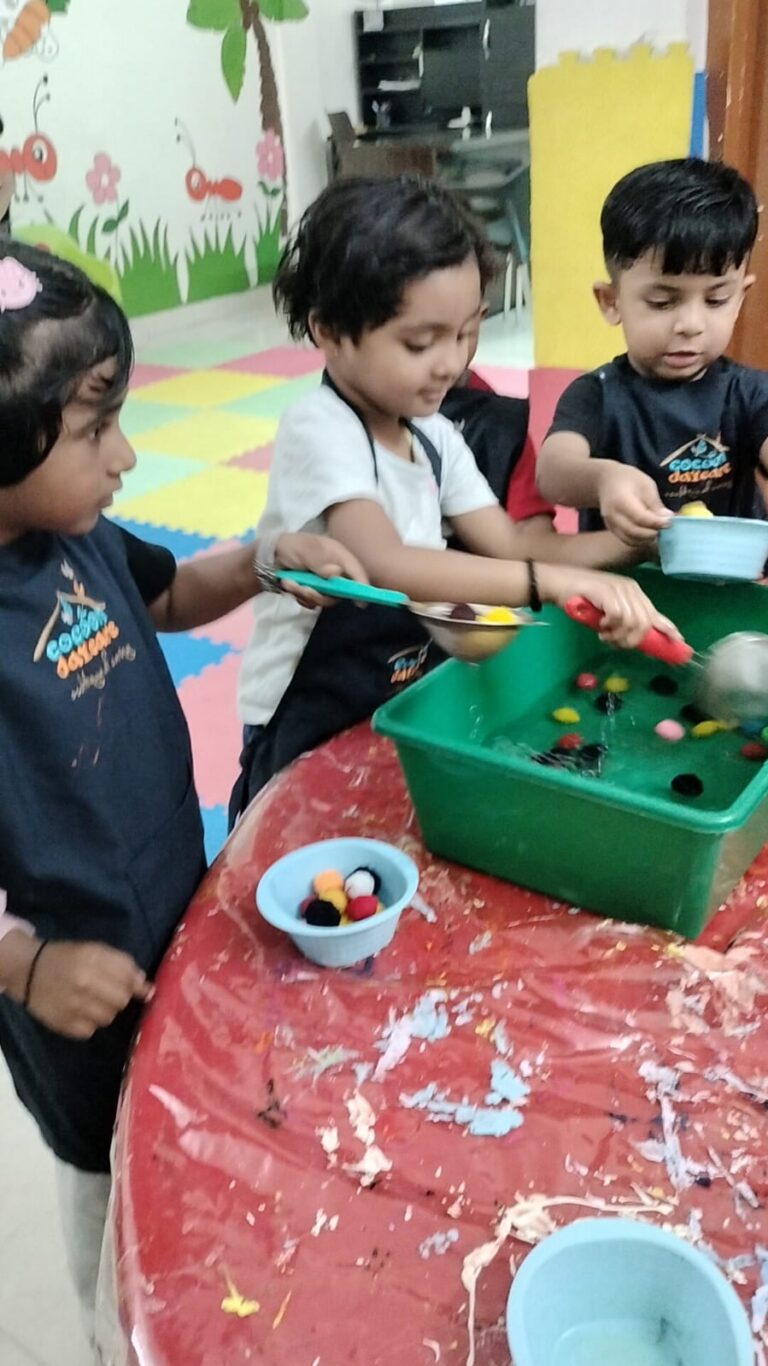
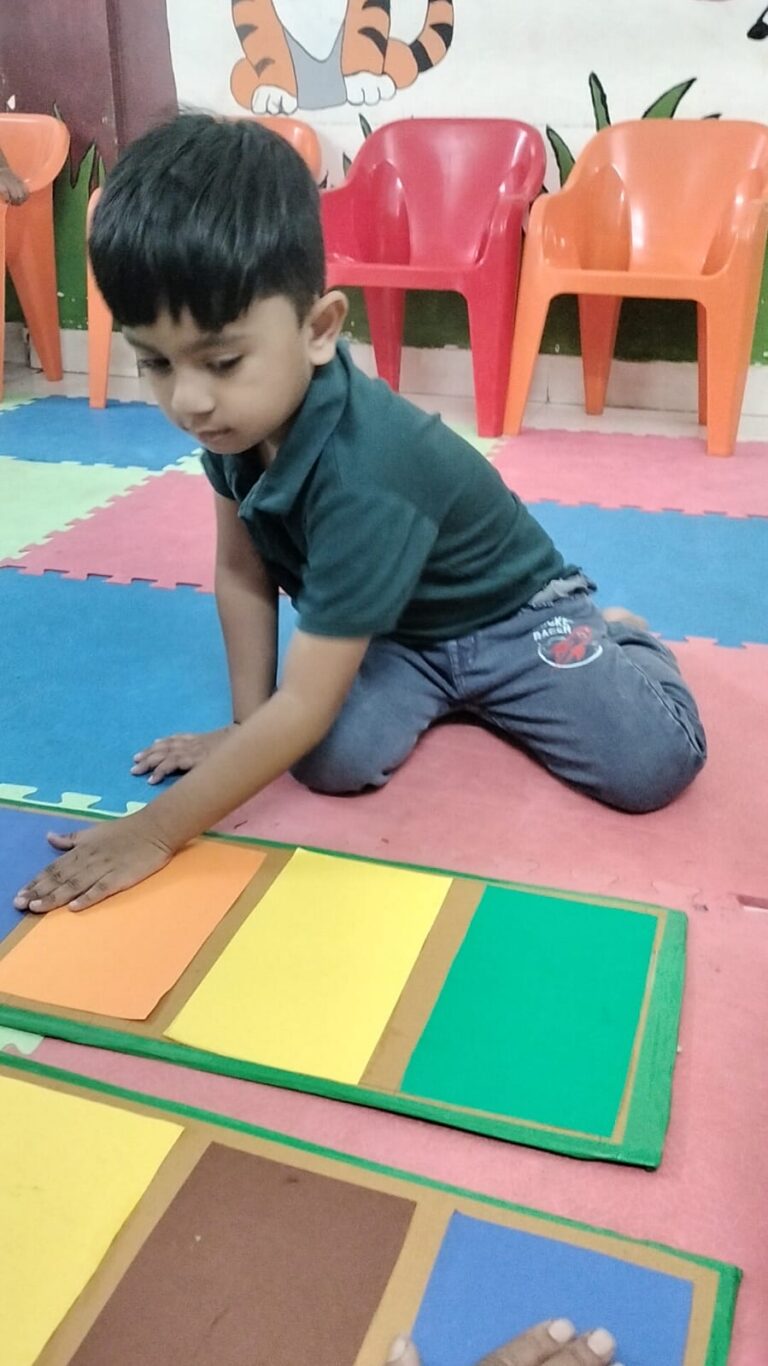
For a two-year-old, expect shorter structured activities interspersed with guided play, with strong emphasis on language exposure and sensory activities. By three, children can typically engage with slightly longer group activities, more structured turn-taking, and early pre-academic exposure like colours, shapes, and simple counting, layered into play rather than delivered as formal lessons.
Signs the Programme Isn’t Adapting
- The same activities and routine are used regardless of whether a child just turned two or is nearly three and a half.
- There is no increase in structured group interaction as children approach three.
- Staff cannot describe how the daily plan changes across this age range when asked directly.
At Cocoon, our curriculum is adapted specifically for each developmental stage within this age range, delivered consistently at both our Besa and Somalwada centres. Read more about our curriculum, or book a visit.
Frequently Asked Questions
Should a two-year-old and a three-year-old be in the same daycare group?
This varies by centre. What matters more than exact grouping is whether activities within the group are adapted to each child’s specific stage.
How can I tell if my child is developmentally on track for their age group?
Ask your child’s teachers directly for specific observations, rather than relying on general reassurance. A good programme tracks and can discuss individual progress.
What should I ask about the programme’s approach to this age range?
Ask specifically how the daily structure and activities change as children move from two to three years old, and what markers the centre uses to adjust a child’s programme.