Daycare Separation Anxiety: Why It Happens and What Actually Helps
A crying child at drop-off is one of the most difficult moments in early parenthood — and one of the most common. If your child cries every morning when you leave them at daycare, you are not doing anything wrong, and neither is your daycare. This is a well-documented developmental stage, and understanding why it happens is the first step to helping your child move through it.
What Separation Anxiety Actually Is
Separation anxiety typically appears between eight months and three years of age, often peaking around twelve to eighteen months. At this stage, a child understands that you exist even when they cannot see you, but has not yet developed the confidence that you will reliably return. The distress they show at drop-off is a sign of healthy attachment, not a warning sign about the daycare itself.
It is worth separating two things that often get confused: how a child behaves during the goodbye, and how a child behaves for the rest of the day. Many children who cry hard at drop-off are calm, engaged, and playing normally within minutes of their parent leaving. Ask your daycare directly how your child settles after you go — that answer tells you far more than the goodbye itself.
Why It Happens Even at a Good Daycare
Parents sometimes assume that if their child is distressed, something must be wrong with the environment. In most cases, that is not the conclusion the evidence supports. Separation anxiety is tied to a child’s stage of cognitive development, not to the quality of care they are receiving. A well-run, safe, attentive daycare can still see a child cry at the door every day for two or three weeks. What matters is what happens after that window.
What Actually Helps
A few practices consistently make the adjustment period shorter and easier, for both the child and the parent:
- Keep the goodbye short and consistent. A brief, warm goodbye said the same way every day helps a child predict what is coming. Lingering, or leaving without saying goodbye at all, tends to make the anxiety worse rather than better.
- Build a goodbye ritual. A specific phrase, a particular hug, a wave through the window — small, repeatable routines give a child something familiar to hold onto during an unfamiliar moment.
- Bring one object from home. A soft toy, a small blanket, anything the child already associates with comfort. It provides continuity between the two environments.
- Stay calm yourself. Children pick up on a parent’s own uncertainty. A parent who appears confident and unhurried at drop-off, even when it is hard, communicates safety more effectively than words can.
- Give it real time. Judge the adjustment over two full weeks of consistent attendance, not two days. Inconsistent attendance during this period, where a child is in and out of daycare unpredictably, tends to extend the difficulty rather than shorten it.
When It’s Worth a Closer Look
Most separation anxiety resolves within two to three weeks of consistent attendance. It is reasonable to raise concerns with your child’s teachers if crying is severe and shows no improvement at all after a month, if your child seems distressed for the entire day rather than settling after drop-off, or if you notice a sudden change in a child who had previously adjusted well. Any of these are worth a direct conversation with your daycare, not a reason to assume the worst on your own.
How This Is Handled at Cocoon
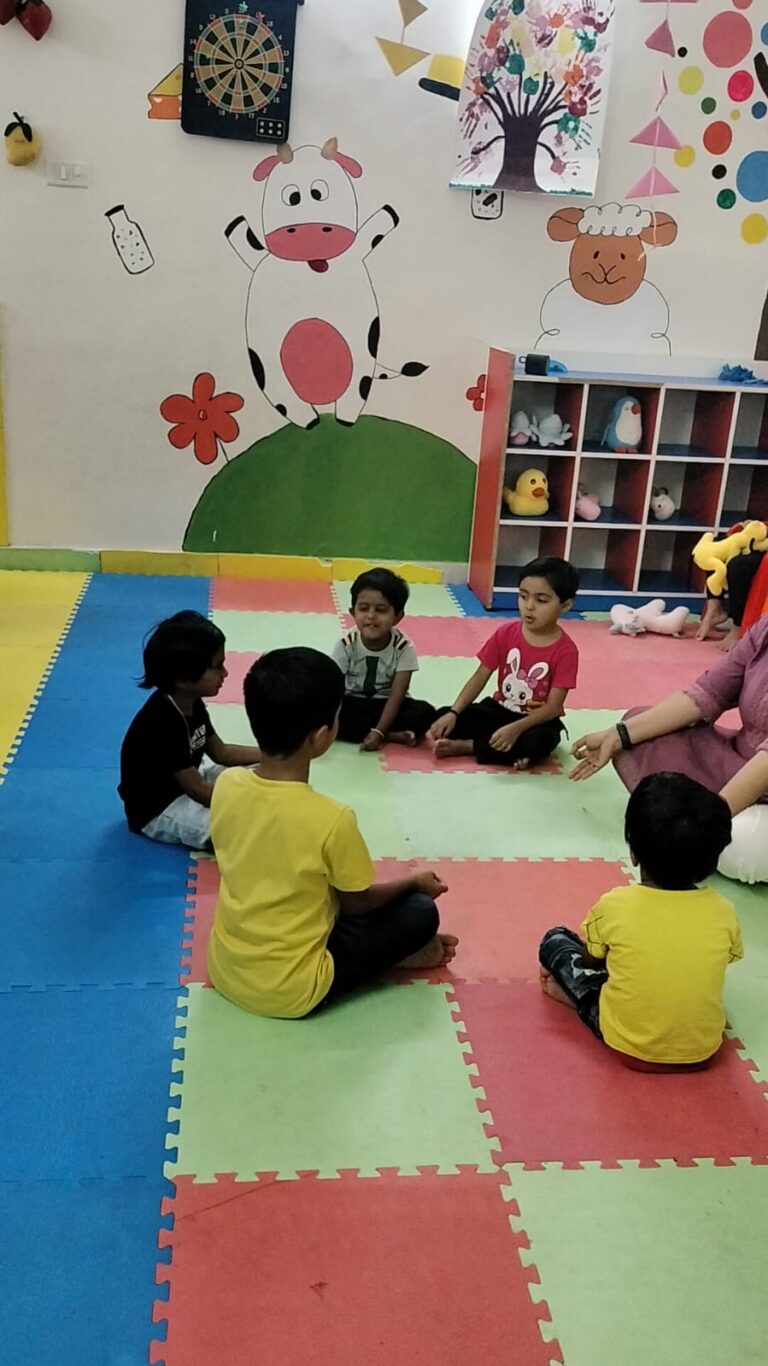
At Cocoon, every child transitions in gradually rather than being placed into a full day immediately. Our all-female staff work with the same children consistently, so your child is building trust with a familiar, recognisable adult rather than a rotating set of caregivers. Parents receive real-time updates throughout the day, which means you do not have to wait until pickup to know how the morning actually went after you left. For most families, that visibility does more to ease the adjustment than anything else.
If your child is approaching their first day of daycare, or is currently going through this adjustment period, we are happy to talk through what to expect. Book a visit to see how we manage transitions at our Besa and Somalwada centres, or read our related guide on how to know if your toddler is ready for daycare.
Frequently Asked Questions
How long does daycare separation anxiety usually last?
Most children show significant improvement within two to three weeks of consistent daily attendance. Some settle within days; a smaller number take closer to a month.
Is it bad for my child to cry at drop-off every day?
Not on its own. Many children cry at the door and are completely settled within minutes. What matters more is how your child behaves for the rest of the day, which is worth asking your daycare about directly.
Should I sneak out when my child is distracted to avoid a difficult goodbye?
This is generally not recommended. A brief, consistent goodbye helps a child build trust that you will always say goodbye and always return, which tends to reduce anxiety over time more effectively than avoiding the moment.
At what age does separation anxiety usually peak?
It most commonly peaks between twelve and eighteen months, though it can appear anywhere from eight months to three years of age.